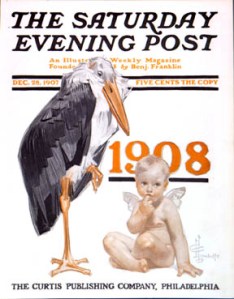
One rhetoric of cuteness is expressed through the sentimentality of the New Year. Of course, I’m talking about the symbolism of Baby New Year, which is representational of new beginnings and future possibilities. Somehow most (if not all) of us subscribe to the false linearity of this “hit refresh” chronology. You know, something like a perpetual reset button.
I think this temporal aspect of cute rhetoric can be understood by looking at the spatial conceptualizations laid out by Henri Lefebvre in The Production of Space. According to Lefebvre, social spaces give rise to time spent as social production. This relationship happens so readily that an ostensibly obvious relationship between where we are when we are/were/have been doing something easily lends itself to a tautological frame. As I see it, this a/cute rhetoric of an annual “new year” forecloses on notions of space as arenas of revolutionary production by enclosing our cortical and tactile perceptions of spatial arrangements in such a way that our day-to-day practices actually seem as though they can be readily controlled (and thereby, ultimately predicted).
This workaday rhetoric is expressed through our bodily interactions and “[r]epresentations of the relations of reproduction [as] sexual symbols, symbols of male and female, sometimes accompanied, sometimes not, by symbols of age — of youth and old age” ( 32, emphasis mine). Could this mean that the entire economy of modern global culture significantly depends on a cute notion of temporality for the perpetual renewal and replenishment of libidinally attached families — as the notion of “the family” is seen as the primary incubator that generates and re-generates seemingly natural power relations and structural economies? In other words, do cute spaces offer themselves up to quarters of efficiency?
Of course this social classification process that sorts individuals into various markets is necessarily reproduced in calendars that make time a fetish or object — as though the collection of these little objects — seconds, minutes, hours, days, months, years, decades, and so on — can be somehow a/cutely contained within a single lifetime or within the span of a few generations. This sense of “legacy” is absolutely necessary for the perpetuation of inherited class standings and all the subsequently naturalized social relations — namely labor markets — that govern the ongoing reproduction of spatial practices in the way that we have come to re-cognize them as unavoidably True. Therefore, cute can be seen as a means of marking time through the sorting of populations. Here’s where Marx’s conceptualization of time as material history really offers itself to an interesting critique of cuteness.
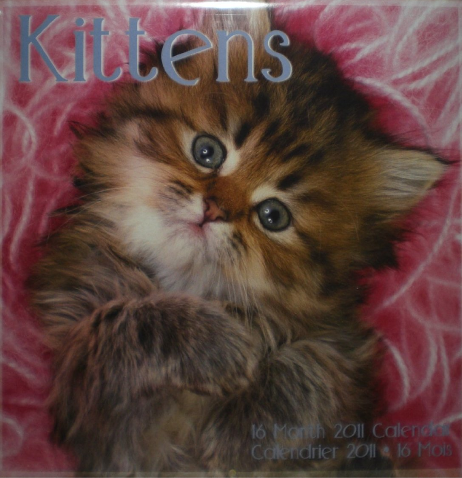
Actually, if you think about it, cute kitten calendars are a literal extension of this idea. Every single month we face a brand new pay/billing cycle with a furry little friend to help us keep track of it all.


 CircuitouslyCute
Leave a comment